Writings · Memory — 14 min read
Why Childhood Feels Like Another Country
An exploration of memory, childhood and identity through photography, travel and personal history. Why does childhood often feel less like a period of life and more like a foreign country we can never fully revisit?
By Kobi Israel · · 14 min
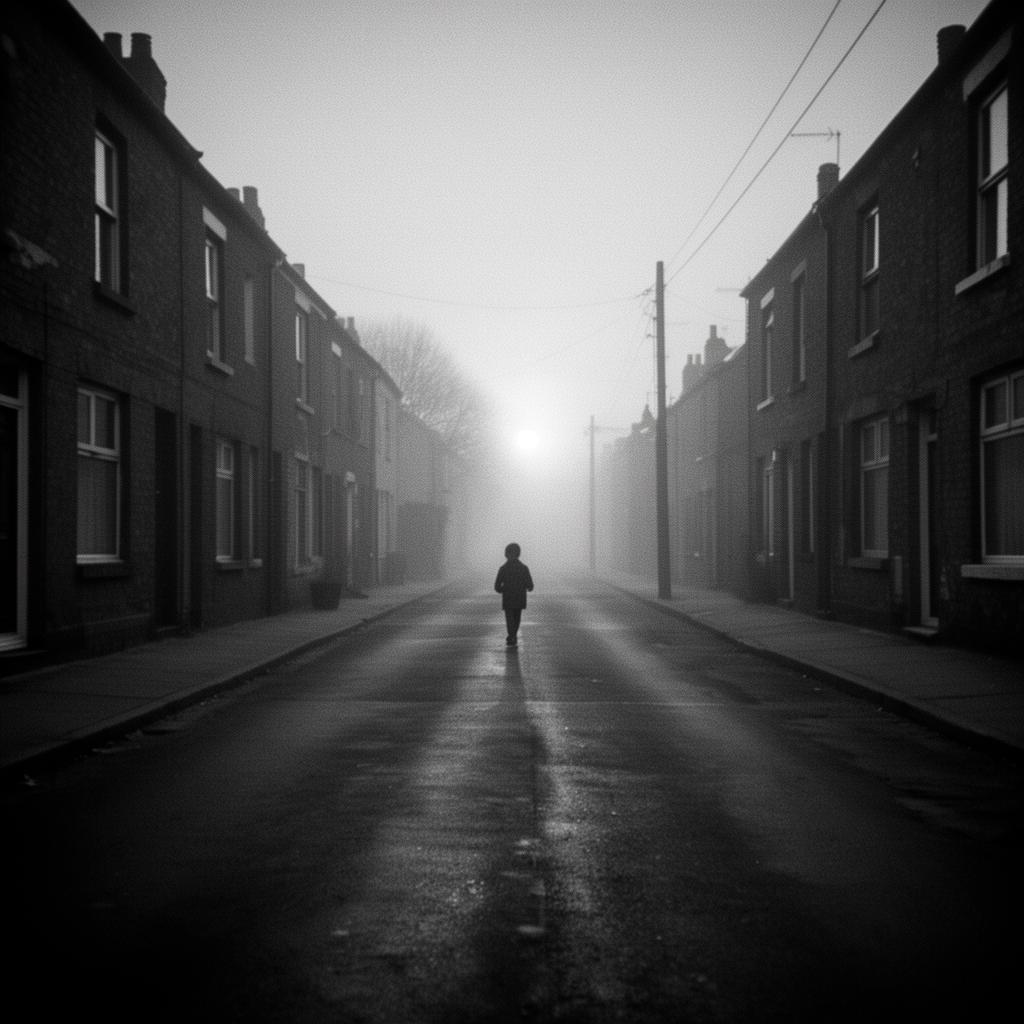
There is a street I still know how to walk despite not having walked it for decades.
I remember the crack in the pavement where I balanced like a tightrope walker. I remember a wall that seemed impossibly high and a tree that appeared large enough to support an entire kingdom among its branches. I remember distances measured not in metres but in courage. The journey from my front door to the corner shop felt as significant as crossing a continent.
When I return there now, the street is shorter. The wall is lower. The tree is smaller. Nothing has changed except the person measuring it.
This may be the first sign that childhood resembles a foreign country more than a period of time. We imagine it as a chapter behind us, but it behaves more like a place we once inhabited. Its language becomes difficult to speak. Its customs become strange. Its landmarks remain familiar yet somehow unrecognisable.
The older I become, the less childhood feels like my past and the more it feels like somewhere I once travelled.
Travel has always fascinated me for this reason. Whenever I arrive in a new city, I am struck by the speed at which unfamiliar places become inhabited by memory. A café visited once becomes "the café where that conversation happened." A station becomes "the station where I missed the train." A bridge becomes "the bridge where I stood watching rain."
Places collect stories the way old coats collect dust. Childhood may be the first place where this process begins.
The streets where we grow up are not merely physical locations. They become containers. They store our fears, ambitions, embarrassments and discoveries. Long after events themselves have faded, the geography remains quietly holding their outlines.
This may explain why returning to childhood places often produces a peculiar disappointment. We expect reunion but encounter translation. The house remains. The room remains. The street remains. Yet the emotional landscape has vanished.
We arrive carrying a map that no longer corresponds to the territory.
The French philosopher Gaston Bachelard suggested that houses are not simply structures but repositories of memory. Every staircase, corridor and doorway becomes charged with psychological significance. We do not remember rooms as architects do. We remember them as emotional beings. A bedroom is not four walls. It is where fear first arrived. Or loneliness. Or wonder. Or desire. The same room may contain all four.
Photography complicates this relationship further. A photograph appears to offer direct access to childhood. We open an album and encounter a younger version of ourselves standing beside a bicycle, holding a toy, staring awkwardly at the camera. The image seems straightforward.
Yet the photograph rarely restores the memory itself. Instead, it often creates a new memory. We begin remembering the photograph rather than the original event. The image gradually replaces experience.
Roland Barthes wrote that photographs possess a strange authority because they insist upon one undeniable fact: this has been. The child in the photograph existed. The moment existed. The light touching the child's face existed. Yet the meaning of the image remains unstable. Who was that child? What frightened him? What delighted him? What did he believe about the future? The photograph cannot answer. It merely proves that someone once stood there.
I sometimes wonder whether childhood itself survives only as a collection of photographs assembled by memory. Each year we revisit certain stories while forgetting thousands of others. Eventually these selected memories become the official version of our past. What if childhood is not remembered but edited?
The question becomes more unsettling when viewed through family history. Every family functions as a collective storyteller. Certain events are repeated until they become legend. Others disappear completely. Around dinner tables and family gatherings, narratives are rehearsed and refined. Children inherit these stories long before they possess memories of their own.
At some point it becomes difficult to separate what happened from what has been told. We remember not only experiences but interpretations. This is why siblings often describe entirely different childhoods despite sharing the same house. Memory is less an archive than a collaboration.
Perhaps this is why childhood increasingly resembles a foreign country. We can visit its borders but never fully inhabit it again. The country continues changing without us. Every return produces a different destination. A photograph from twenty years ago means one thing at forty and another at sixty. The same image acquires new interpretations as we do. Memory is not fixed because identity is not fixed. The person remembering is always changing.
Several years ago, I returned to a neighbourhood I had known intimately as a child. I expected recognition. Instead, I felt like a tourist. The buildings remained. The roads remained. Even certain shop signs remained. Yet everything appeared detached from its original emotional context.
For a moment I understood what immigrants sometimes describe when returning to countries they left decades earlier. The homeland survives physically but not psychologically. The country remembers a different version of them. Perhaps childhood operates according to the same principle. The child who once inhabited that world no longer exists. The traveller who returns is a stranger.
This realisation contains both sadness and liberation. Sadness because there is no route back. Liberation because memory is not a prison. The purpose of childhood may not be preservation but transformation. We carry its traces rather than its territory.
This becomes particularly visible when travelling with children. Watching a child encounter a city reveals how different their geography is from ours. Adults notice architecture, history and logistics. Children notice hidden passages, unusual sounds, interesting shadows and possibilities for adventure. The city becomes alive again. Not because it has changed. Because childhood briefly returns through another person's eyes.
For a parent, this can feel like standing simultaneously in two countries. One is the world as it exists. The other is the world as it once appeared. The distance between them is measured in years. The bridge between them is wonder.
Perhaps this is why we photograph children so relentlessly. Not only because they are growing but because they temporarily preserve a way of seeing. Every photograph records not merely a face but a relationship to reality that will eventually disappear. We photograph childhood because we know it is already leaving. Not the child. The country. The invisible nation of first discoveries, impossible distances and exaggerated fears.
The place where ordinary streets feel enormous. The place where time itself moves differently. The place we spend our lives trying to remember. And perhaps misunderstanding.
Because childhood is not a destination waiting to be recovered. It is a landscape continually recreated by memory. A country whose borders shift every time we tell its stories. A country we can never return to in the ordinary sense.
Yet one we continue visiting whenever an old photograph falls from a drawer, whenever a familiar smell unexpectedly appears, whenever we walk down a forgotten street and recognise, for a brief moment, the person we once were. Not because we have returned. But because the country has briefly returned to us.
Parallax Letters