Writings · Photography — 14 min read
Why We Photograph the People We Fear Losing
Why do we photograph the people closest to us? A meditation on memory, family, love, loss and photography as an act of resistance against disappearance.
By Kobi Israel · · 14 min
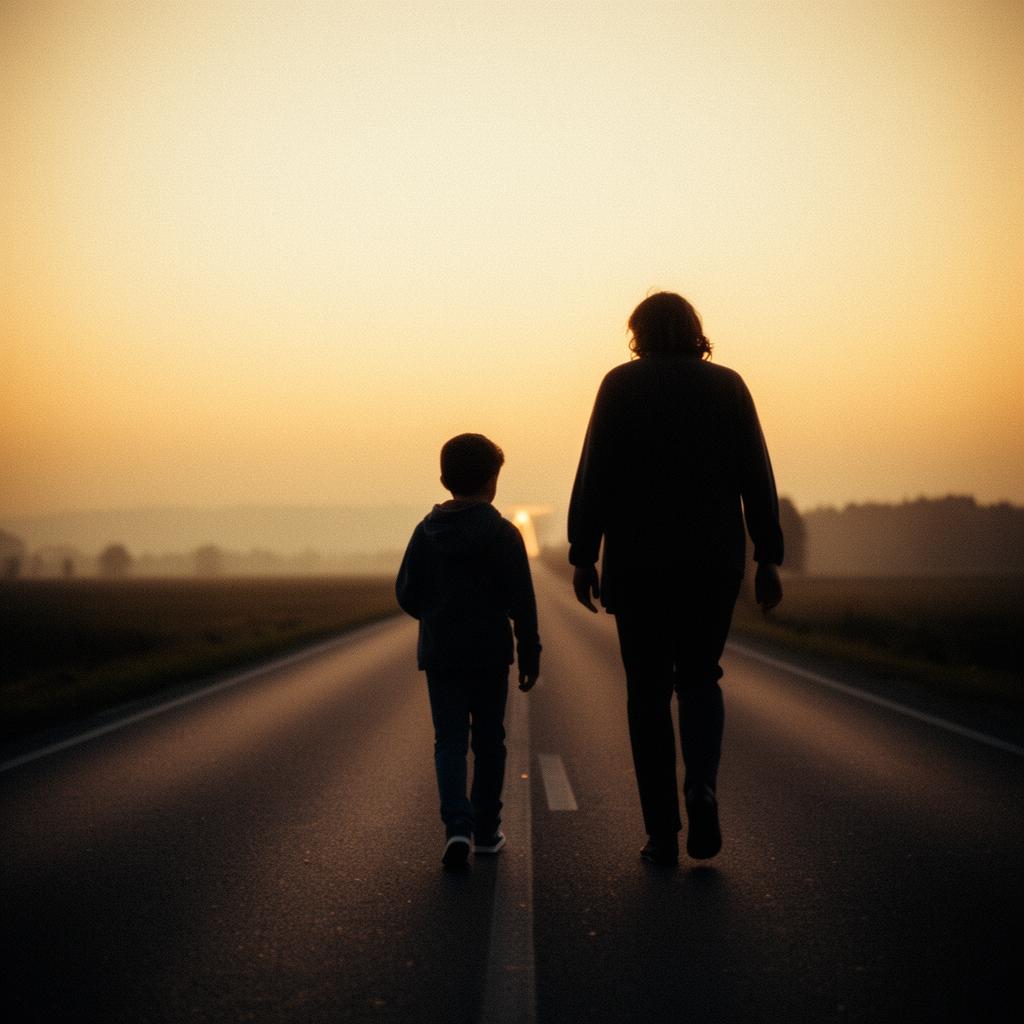
Every photograph begins with a small act of fear.
Not fear of the camera. Not fear of being seen. Fear of disappearance.
Long before photography existed, people painted portraits, carved statues, wrote letters, preserved locks of hair and carried miniature likenesses of those they loved. The technologies changed, but the desire remained remarkably consistent.
Human beings have always searched for ways to negotiate with absence. Photography merely made the negotiation easier.
We tell ourselves we photograph birthdays, weddings, holidays, school plays and family gatherings because they are important occasions. Yet importance alone does not explain our behaviour. We do not photograph everything equally. Some moments seem to pull us instinctively toward the camera.
A child laughing. A parent standing in a doorway. A friend sleeping during a train journey. Someone turning away from us at precisely the moment we realise we love them.
The camera appears almost automatically. It is as if another part of the mind has already recognised what the conscious mind has not yet admitted. That everything is passing.
The photograph becomes a response to this knowledge.
I once spent an afternoon looking through family photographs with my mother. Hundreds of images emerged from envelopes, albums and boxes that had survived decades of house moves and changing lives. There were birthdays nobody remembered, relatives whose names had become uncertain and locations that could no longer be identified.
Many of the photographs had become detached from their stories. Yet something remained. The faces. The gestures. The peculiar dignity of people who had no idea they were becoming memories.
What struck me most was not how much the photographs revealed. It was how much they concealed.
The image recorded appearances with extraordinary precision, yet remained silent about everything that mattered. The photograph could not explain who loved whom. It could not reveal private fears. It could not describe arguments, disappointments or hopes. It could not tell us what happened next. A photograph preserves evidence. Not understanding.
Roland Barthes famously suggested that every photograph carries the same underlying message: This has been. The statement appears simple. Yet it contains a quiet catastrophe. Every photograph simultaneously announces existence and disappearance. The person was here. The moment happened. The light touched this face. And yet the moment is already gone.
Perhaps this is why photographs often become more valuable with time. A photograph taken yesterday may feel ordinary. The same photograph viewed twenty years later becomes something entirely different. Time develops photographs in ways chemistry never could.
An image acquires emotional meaning through survival. The longer it remains, the more it accumulates. The child becomes an adult. The adult becomes elderly. The elderly become absent. The photograph remains.
This may explain why parents photograph children with such relentless determination. On one level, the reason seems obvious. Children change quickly. But there is something deeper occurring. The parent is not only documenting the child. The parent is documenting a relationship.
Every photograph contains two portraits. The visible person standing before the lens. And the invisible person standing behind it. The photograph of a child says as much about the photographer as the subject. It reveals attention. Affection. Fear. Longing. Hope. The image becomes a map of emotional investment.
This becomes especially apparent when looking at photographs after relationships have changed. A photograph made during a happy period acquires entirely different meanings after separation, conflict or loss. The image itself remains unchanged, but the viewer no longer occupies the same emotional position. The photograph becomes unstable. Not because it changes. Because we do.
Susan Sontag argued that photography transforms experience into an object that can be possessed. There is truth in this observation. Yet photographs never fully belong to us. We imagine that we own them because we keep them in albums, drawers and digital archives. But photographs have a tendency to escape our intentions.
Years later they begin telling different stories. They reveal details we never noticed. They expose contradictions. They challenge official family narratives. Sometimes they become more intelligent than their creators.
A photograph initially taken as proof of happiness may later reveal loneliness. An image intended to document a place may unexpectedly preserve a relationship. An ordinary snapshot may become the final photograph of someone we loved. The meaning arrives later. Often much later.
Several years ago, I found myself staring at a photograph of my father. Nothing extraordinary was happening in the image. He was standing outside a building, looking slightly away from the camera. The composition was unremarkable. The lighting was imperfect.
Had I encountered the photograph on the day it was taken, I might have glanced at it for a second and moved on. Instead, I spent several minutes looking. Not because of the photograph itself. Because of what time had done to it.
The image had become a doorway. Not into the past exactly. Into a relationship. The photograph did not restore the moment. It restored a feeling. This distinction matters.
People often speak of photographs preserving memories. I am not sure they do. Memory is fluid. Photographs are fixed. The two operate according to different rules. What photographs preserve more successfully is emotional access. They do not return us to the past. They reconnect us with our relationship to the past.
Perhaps this explains why certain photographs can provoke tears while others leave us indifferent. The emotional power of a photograph rarely depends upon its technical quality. The most moving image in a family archive is often blurred, badly framed or imperfectly exposed. Its value lies elsewhere.
The photograph serves as a bridge between versions of ourselves. Between who we were and who we became. Between presence and absence. Between living and remembering.
Photography becomes particularly significant when viewed through the lens of mortality. Every photograph contains a future ghost. Not in a supernatural sense. In a temporal one. Every person visible in an image is moving toward absence. Including the photographer. Including the viewer. Including ourselves.
The photograph records an encounter between mortality and light. Perhaps this is why photography remains so emotionally powerful despite the billions of images produced each year. The medium continues addressing the same fundamental human problem. How do we hold on to what cannot be held?
The answer, of course, is that we cannot. Not completely. The photograph does not stop aging. It does not prevent death. It does not preserve relationships indefinitely. It does not save anyone.
What it offers instead is something quieter. A trace. A fragment. Evidence that a particular encounter occurred. Evidence that someone mattered. Evidence that love briefly occupied a specific place in the world.
This may be the real purpose of family photography. Not preservation. Witnessing. The photograph says: You were here. I was here. For a moment our lives overlapped. And despite knowing that everything changes, I wanted to leave some evidence that this happened.
Perhaps all photographs are ultimately variations of the same sentence. Not "Look at this." Not "Remember this." But: This mattered. And perhaps that is why we continue pressing the shutter. Not because we believe photographs can stop loss. But because they help us acknowledge love.
Parallax Letters
Receive new investigations by post.
Related Essays