Writings · Travel — 14 min read
The Places I Travel My Son To
A meditation on travel, memory and inheritance. Can a parent pass on places in the same way they pass on stories? An essay about journeys, belonging and the fragile geography of memory.
By Kobi Israel · · 14 min
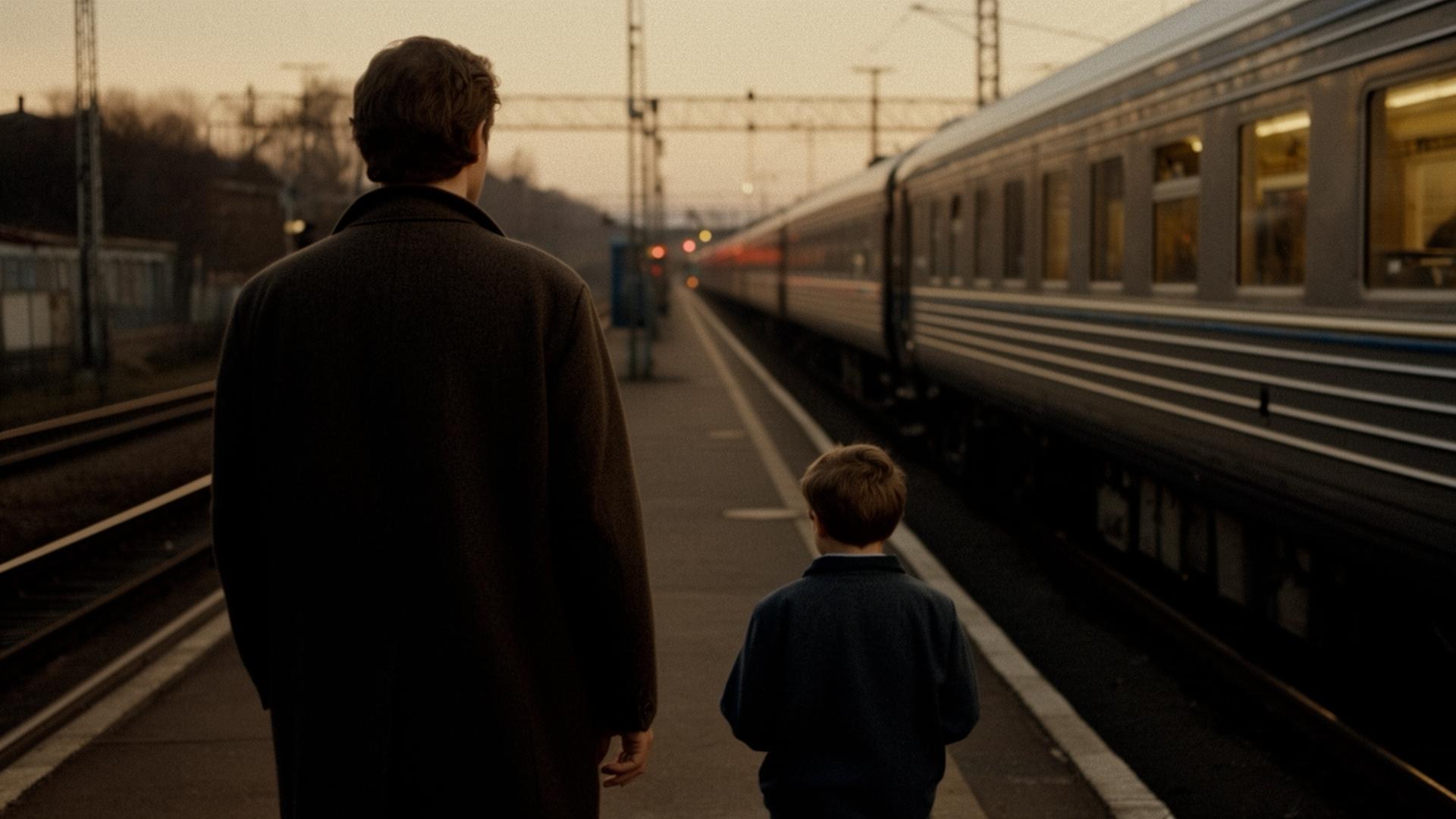
Every parent leaves an inheritance. Some leave houses. Some leave money. Some leave family names, heirlooms, habits or unfinished stories. I have often wondered whether it is possible to leave places.
Not ownership of places. Not property. Something stranger. The emotional geography of a life.
The café where a decision was made. The station where a goodbye occurred. The road that once felt endless. The city that changed the direction of a life. The beach where fear dissolved. The street where love first appeared.
As I have grown older, I have become increasingly aware that the places we carry within us often survive longer than the events themselves. The facts blur. Dates disappear. Conversations fade. Yet certain corners of the world remain strangely illuminated.
A particular train platform. A hotel corridor. A market square at dusk. A hill overlooking a city.
The memory attaches itself to the location like ivy to stone.
Perhaps this is why I travel with my son. Or perhaps more accurately, why I travel him to certain places. The distinction matters.
When adults travel, they often seek novelty. Children travel differently. They absorb places without fully understanding why they matter. A street becomes memorable because of an ice cream. A city becomes unforgettable because of a pigeon that landed on a bench. A train journey becomes important because of a conversation no adult considered significant.
Children are accidental archivists. They collect details adults overlook.
Watching my son experience a place often feels like observing two journeys simultaneously. One belongs to him. The other belongs to me. He is encountering the place for the first time. I am encountering my own memories of it. Between these two experiences lies an invisible conversation. A transfer is taking place.
Not knowledge exactly. Not history. Something more difficult to define. Inheritance.
I remember taking him through a city I had known many years earlier. The buildings had changed little. The streets followed the same paths. Yet the city I carried inside me no longer existed. The restaurants were different. The people were different. Most importantly, I was different. Memory had transformed the place into something else. The city in my mind had become a parallel city.
The philosopher Walter Benjamin once described memory not as an instrument for exploring the past but as the medium through which the past is experienced. This distinction becomes obvious while travelling.
We imagine we are revisiting locations. In reality, we are revisiting versions of ourselves.
The city serves as a mirror. The landscape reflects time. The journey becomes less geographical than psychological.
This is especially true when travelling with a child. A child transforms every location into a comparison between generations. The same street contains two realities. The place as remembered. The place as discovered. Neither is more truthful. Both exist simultaneously.
Several years ago, while travelling with my son, we found ourselves standing beside an old railway line. Trains have always fascinated me, perhaps because they embody one of memory's central contradictions.
They move forward while remaining attached to fixed tracks. Memory operates similarly. We move through life imagining ourselves free, yet much of what we become follows invisible routes established long ago.
My son watched the passing train with excitement. I watched him. The train itself became secondary. What interested me was the possibility that this ordinary moment might someday return to him unexpectedly. Perhaps decades later. Perhaps in another country. Perhaps while travelling with his own child.
The memory would no longer belong entirely to me. It would become part of his personal geography.
At that moment I understood something that photography had taught me years earlier. The purpose of preservation is not ownership. It is transmission.
This may be why family travel feels different from tourism. Tourism collects destinations. Family travel creates future memories. The distinction is subtle but profound. One is about seeing. The other is about planting.
Every journey becomes a seed placed somewhere beyond the horizon of the present. Most will be forgotten. Some will survive. A few will return years later carrying meanings impossible to predict.
The surprising thing is how little control we possess over which memories endure. Parents often assume important moments will become important memories. Experience suggests otherwise.
The grand museum may disappear completely. The unexpected conversation survives. The famous landmark fades. A broken vending machine becomes unforgettable. The planned memory vanishes. The accidental memory remains.
Children frequently understand this better than adults. They are less concerned with significance and more attentive to experience. Perhaps this is why childhood itself feels like another country. Not because it happened long ago. Because it was experienced differently.
The world appeared larger. Time moved more slowly. Wonder occupied more space. Travelling with a child occasionally allows us temporary access to that lost perspective. Not a return. A glimpse. A reminder.
The places I travel my son to are rarely the places I imagine I am showing him. I may think I am introducing him to Venice, Havana, Kyoto or an overlooked village in Eastern Europe. But those are merely coordinates. What I am really offering are opportunities for attachment. Potential future memories. Possible emotional landmarks. A geography that may one day help him understand himself.
Whether this transfer succeeds remains impossible to know. Inheritance always involves uncertainty. The stories we tell our children are altered by them. The places we share with them become theirs. The memories we offer are rewritten. Perhaps they must be. Otherwise they would not truly belong to the next generation.
The older I become, the less interested I am in preserving exact versions of my experiences. What matters is continuity. A conversation extending across time. A chain of observations connecting one life to another. A father standing beside a son. A son standing beside a child not yet born.
The same questions moving through different bodies. The same wonder appearing in different eyes.
Travel becomes one method of carrying these questions forward. Not answers. Questions.
What does it mean to belong somewhere? Can a place remember us? Do we inherit landscapes in the same way we inherit stories? And if memory itself is a form of travel, where exactly are we going when we remember?
Perhaps every parent spends a lifetime constructing an invisible map. A map composed of photographs, stories, journeys and fragments of experience. Most of it remains unfinished. Large sections disappear. Many routes lead nowhere. Yet we continue drawing.
Not because we expect future generations to follow the map precisely. But because we hope they may recognise a few landmarks. A station. A street. A city at dusk. A photograph. A memory.
Evidence that someone once travelled this way before them. And evidence that they were loved enough to be shown the road.
Parallax Letters
Receive new investigations by post.
Related Essays