Writings · Film — 13 min read
Why Tarkovsky Filmed Time
An exploration of Andrei Tarkovsky, memory, cinema and time. Why did Tarkovsky believe cinema's true material was not story, image or performance, but time itself?
By Kobi Israel · · 13 min
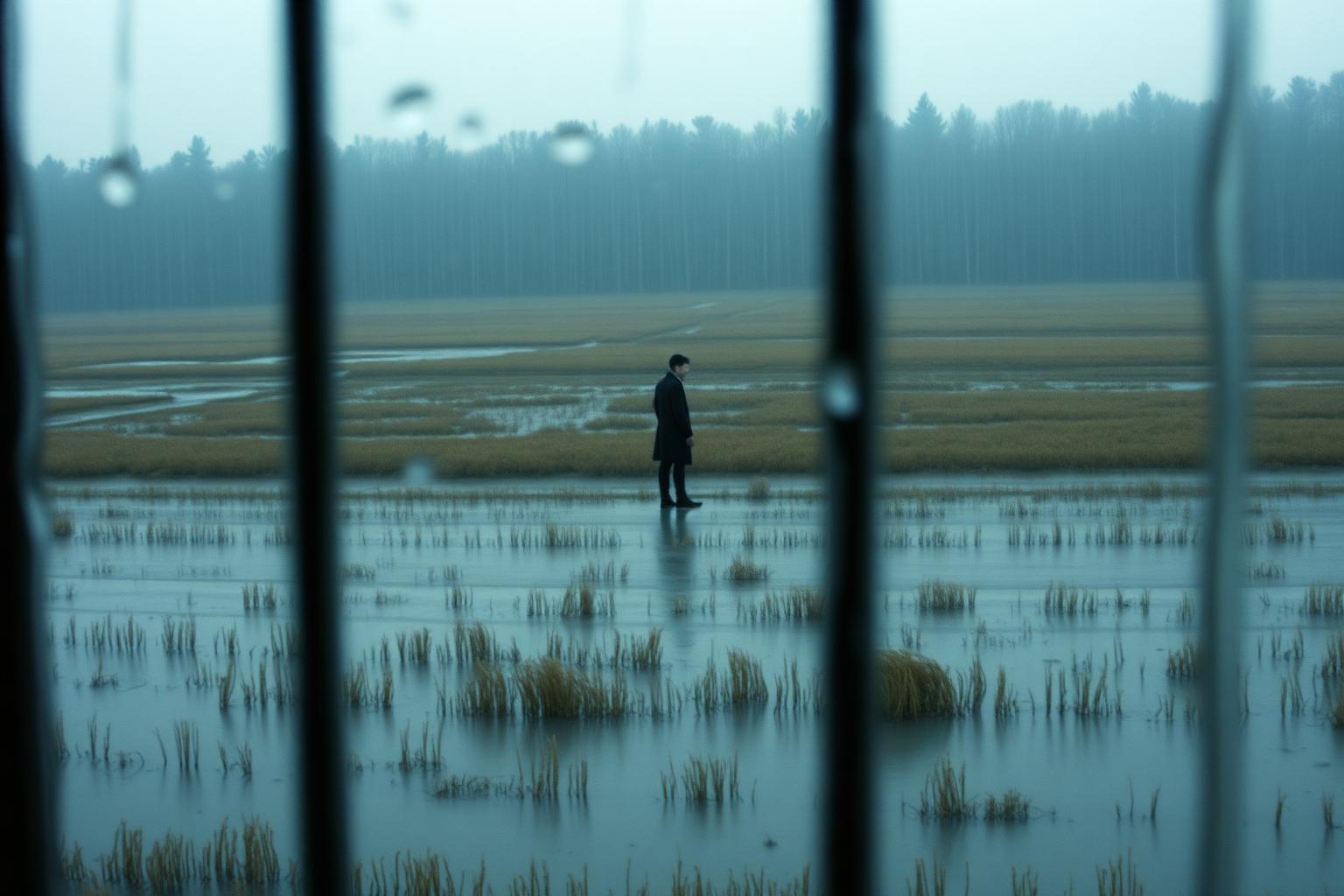
The first time I watched a film by Andrei Tarkovsky, I felt impatient. Then confused. Then strangely moved. Nothing seemed to be happening. People walked. Water dripped. Wind moved through grass. A candle burned. Someone stared through a window. The film appeared less interested in narrative than in waiting.
Years later, I realised that what felt unusual was not the absence of action. It was the presence of time. Most cinema hides time. Tarkovsky revealed it.
This may sound like a contradiction. All films exist within time. Every image lasts a certain duration. Every cut divides one moment from another. Yet Tarkovsky understood something deeper. Cinema possesses a unique relationship to reality. Unlike painting, literature or photography, film captures duration directly. The camera records time passing. The medium's true material is not image. It is time itself.
Tarkovsky called this "sculpting in time." The phrase has haunted me for years. Not because it describes filmmaking. Because it describes memory.
Memory is also sculpted in time. Every recollection is shaped by duration. The past survives not as a collection of facts but as a collection of temporal experiences. The feeling of waiting for someone. The feeling of walking home at dusk. The feeling of rain against a window. The feeling of an afternoon that seemed endless. The event matters. The experience of time matters more.
Tarkovsky understood this instinctively. Watching films such as The Mirror or Nostalghia often feels less like watching stories than entering memory itself. Chronology becomes unstable. Dreams coexist with reality. Childhood appears beside adulthood. History enters private life. The boundaries separating past and present dissolve. The films do not imitate memory. They inhabit its logic.
This distinction is crucial. Most films represent events. Tarkovsky represented consciousness. The camera became less a recording device than a vessel for thought.
I first understood this while revisiting my own archives. Photographs. Home videos. Letters. Travel notebooks. The material covered decades. At first I attempted to organise everything chronologically. The effort felt sensible. It also felt wrong. Memory rarely obeys chronology. A photograph from childhood suddenly acquires relevance because of something that happened yesterday. A journey taken twenty years ago unexpectedly explains a current emotion. A forgotten image returns carrying new significance. The archive behaves like weather. Not like history.
Tarkovsky's films operate similarly. A childhood memory drifts into the present. A dream interrupts reality. An image returns repeatedly. Meaning accumulates through recurrence rather than explanation. The viewer experiences time emotionally rather than logically.
This may be why his films divide audiences. Some viewers become frustrated. Others become transformed. The difference often depends upon expectation. If we expect information, Tarkovsky feels slow. If we expect experience, he feels profound. The filmmaker was less interested in what happened than in how existence felt.
This emphasis changed my understanding of cinema. For years I thought filmmaking involved constructing narratives. Tarkovsky suggested another possibility. Cinema could preserve states of being. Not actions. Atmospheres. Sensations. Durations. The idea felt liberating. A filmmaker no longer needed to explain everything. The camera could simply remain attentive. Water moving across a floor. Leaves shifting in wind. Light entering a room. A child standing quietly. The ordinary world revealed extraordinary depths when viewed with sufficient patience.
Several years ago I spent an afternoon filming rain. Nothing else. Just rain. The footage appeared uneventful. Later, while watching it, I experienced something unexpected. The recording restored not merely the image of the rain but the feeling of the afternoon itself. The silence. The waiting. The emotional temperature of the day. The camera had preserved duration. Not information. Duration.
This may be Tarkovsky's greatest contribution to cinema. He understood that memory depends less upon events than upon temporal atmosphere. We often forget what happened. We remember how time felt. A childhood summer. A sleepless night. A long train journey. A final conversation. The event becomes secondary. Duration survives.
This insight appears throughout The Mirror. Widely regarded as Tarkovsky's most personal film, it moves through childhood memories, dreams, family history and historical events without attempting conventional coherence. The film trusts association. Images connect through feeling rather than logic. Watching it resembles remembering. The experience can feel disorienting. It can also feel astonishingly familiar. Because memory itself operates this way.
The mind does not organise life as a timeline. The mind organises life as significance. Important moments attract one another across years. The archive becomes magnetic. Certain images continue returning. Others disappear. Tarkovsky filmed according to this principle. He filmed not reality as it appeared. Reality as it remained.
Several scenes from his films have stayed with me for decades. Not because I remember their narrative purpose. Because I remember their temporal texture. A field moving in wind. Water running through an abandoned building. A face illuminated by firelight. A candle carried across a drained pool. The images survive because they contain time. The viewer experiences duration rather than merely observing it.
This is surprisingly rare. Contemporary culture often accelerates perception. Everything becomes faster. Shorter. More efficient. Tarkovsky resisted efficiency. He treated attention as sacred. The camera remained with a moment until the moment revealed itself.
This approach feels increasingly relevant. Not only artistically. Existentially. Modern life encourages constant movement. Tarkovsky encouraged presence. The difference matters. Attention alters experience. The world becomes richer when observed slowly. Time becomes visible.
This may explain why his films continue influencing photographers, filmmakers, writers and artists. Tarkovsky reminds us that existence possesses depth inaccessible to haste. The ordinary world contains mysteries. Most remain unnoticed because we move too quickly. Cinema can slow perception. The camera can teach attention.
Several years after first encountering his work, I realised that Tarkovsky had influenced not only how I make films but how I remember. I became less interested in documenting events. More interested in preserving atmospheres. A room before departure. A train before movement. A conversation before silence. The threshold moments. The durations. The spaces between actions. These fragments often survive longer than the actions themselves. Memory recognises their significance instinctively.
Perhaps this is why Tarkovsky's films feel so personal despite their ambiguity. The viewer contributes their own memories. The film becomes collaborative. A field from childhood. A forgotten room. A familiar silence. The images activate private histories. Cinema becomes memory's companion. Not because it preserves the past. Because it teaches us how to inhabit time.
And perhaps this is what Tarkovsky was truly filming all along. Not stories. Not characters. Not events. Time itself. Visible at last.
Parallax Letters
Receive new investigations by post.
Related Essays