Writings · Queer Culture — 14 min read
Photography and Queer Survival
An exploration of photography, queer history and survival. How images became evidence of existence, love and resistance for generations forced to live between visibility and secrecy.
By Kobi Israel · · 14 min
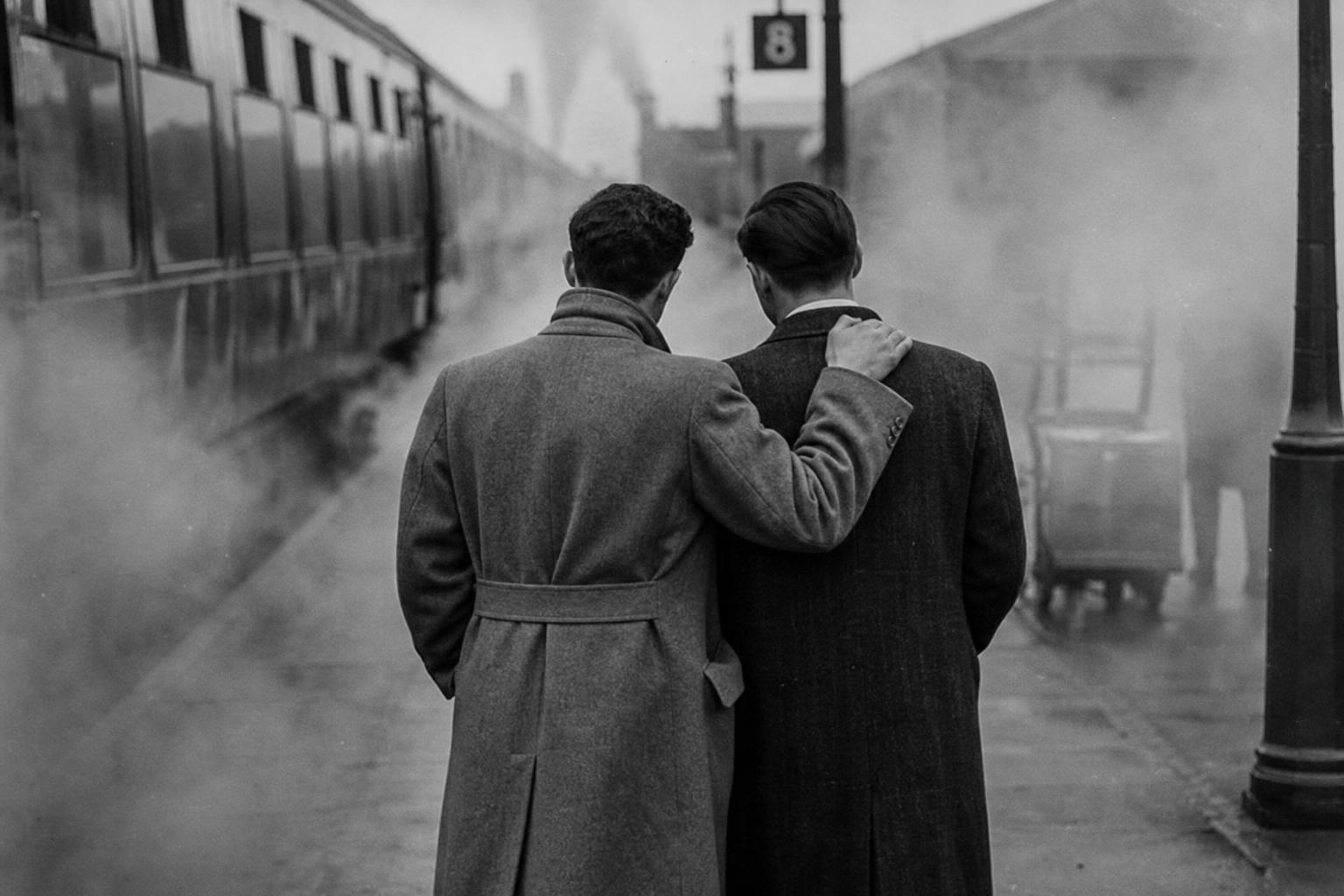
For much of queer history, photography did not simply preserve memory. It preserved proof. Proof that people existed. Proof that they loved. Proof that they found one another despite every attempt to erase them.
For much of queer history, photography served a purpose beyond memory.
It functioned as evidence.
Evidence that someone existed.
Evidence that someone loved.
Evidence that a life had unfolded despite laws, institutions, religions and social expectations insisting it should remain hidden.
Today, photographs appear everywhere. Billions are produced daily. Visibility has become so common that it is easy to forget how recent this condition is.
For generations, queer existence occupied a different relationship to visibility.
To be seen was often dangerous.
To remain unseen was often necessary.
Between these two realities, entire lives were constructed.
Photography entered this space carrying a contradiction.
It could expose.
It could preserve.
Sometimes it did both simultaneously.
I have often been drawn to old photographs for reasons I struggle to fully explain. Antique markets, flea markets, forgotten albums and anonymous archives exert a peculiar pull. Rows of strangers stare outward from another century. Their names have disappeared. Their voices have vanished. Their futures have already happened.
Yet certain photographs resist anonymity.
Two men standing slightly closer than convention required.
A hand lingering on a shoulder.
A glance held for a fraction too long.
A gesture whose meaning survives long after its explanation has been lost.
Looking at such photographs often feels less like observation than investigation.
The image becomes a crime scene from which history has removed most of the evidence.
What remains are traces.
And traces are often enough.
Photography arrived during a period when queer identities possessed few public archives. Official history rarely recorded queer lives honestly. Letters were destroyed. Diaries were censored. Relationships were disguised. Families rewrote narratives. Institutions erased inconvenient details.
Absence became a recurring condition.
Photographs occasionally disrupted that absence.
Not always intentionally.
Many queer photographs survived because nobody recognised their significance at the time. The image appeared innocent enough to escape destruction.
History frequently survives through misunderstanding.
A photograph that once appeared ordinary may later reveal itself as radical.
Two women sharing a room.
Two men travelling together.
Friends who never married.
Companions who remained inseparable for decades.
The camera often recorded more than society could recognise.
This may explain why queer archives carry a distinctive emotional charge.
They contain not only memory but recovery.
Every rediscovered photograph performs a small act of restoration.
The image says:
We were here.
The statement may appear simple.
Yet for communities repeatedly excluded from official narratives, existence itself becomes politically significant.
Visibility is never merely visual.
It is historical.
It determines who is remembered and who is forgotten.
Susan Sontag once observed that photographs furnish evidence.
The observation acquires particular weight within queer history.
For many individuals, photographs remain among the few surviving records of lives otherwise excluded from documentation.
A photograph becomes proof that affection existed.
Proof that intimacy existed.
Proof that joy existed.
Proof that ordinary life existed.
This matters because oppression often produces distorted archives.
Pain is documented.
Criminalisation is documented.
Medicalisation is documented.
Persecution is documented.
Yet ordinary happiness frequently disappears.
The archive becomes unbalanced.
Photography occasionally restores equilibrium.
An image of two people sitting together in a garden may contain more historical significance than a legal document.
Not because it records an event.
Because it records a life.
The distinction matters.
History often privileges events.
Photography preserves existence.
As a photographer, I have become increasingly interested in this difference. The most powerful images are not always those depicting dramatic moments. Often they capture something quieter.
A pause.
A look.
A gesture.
A form of attention.
The camera records relationships with remarkable sensitivity.
Sometimes more sensitively than the photographer understands.
Years later, the emotional truth becomes visible.
This phenomenon appears throughout queer visual history.
Photographs frequently reveal forms of intimacy that language was unable to express publicly.
The image becomes a parallel language.
A coded language.
A language of proximity, posture, clothing, touch and gaze.
The camera preserves what speech cannot safely declare.
This coded quality partly explains the fascination many queer artists have maintained with archives.
Archives are not merely repositories of information.
They are landscapes of possibility.
They allow us to imagine lives that official history neglected.
Every recovered photograph expands the boundaries of belonging.
The viewer recognises a continuity previously concealed.
Someone else stood here before us.
Someone else navigated similar uncertainties.
Someone else loved under similar conditions.
The archive becomes intergenerational.
A conversation begins across decades.
Photography therefore performs two simultaneous functions.
It preserves the past.
It constructs the future.
A young person discovering queer history often encounters photographs before anything else. The image becomes an introduction.
A doorway.
An invitation.
The photograph communicates something immediate.
You are not the first.
You are not alone.
Others lived.
Others loved.
Others survived.
Perhaps this is the deepest connection between photography and queer survival.
Survival is not solely biological.
It is cultural.
Historical.
Emotional.
A community survives when its stories remain accessible.
A community survives when evidence remains visible.
A community survives when future generations can recognise themselves in the past.
Photography contributes to this process in uniquely powerful ways.
Words require translation.
Images often do not.
A glance can travel across a century.
A gesture can survive political change.
A photograph can outlive the language used to describe it.
Several years ago, while looking through an archive, I encountered a photograph of two men standing together beside a railway station. Nothing explicitly identified them as lovers. No explanatory text accompanied the image. No historical certainty was available.
Yet certainty felt strangely unnecessary.
What mattered was possibility.
The photograph invited a question.
Who were they to one another?
The answer remained unknowable.
The question remained alive.
Sometimes history survives not through answers but through questions that refuse to disappear.
The photograph became valuable precisely because it preserved ambiguity.
It allowed imagination to enter where documentation had failed.
This may be why queer archives often feel emotionally different from other archives.
They are filled with absences.
Yet those absences generate their own forms of presence.
The missing information reminds us of what was risked.
The surviving image reminds us of what endured.
Photography cannot recover every lost story.
It cannot reconstruct every life erased from the record.
It cannot replace what has vanished.
But it can leave traces.
And traces matter.
A photograph is a small act of resistance against disappearance.
A refusal to allow existence to pass entirely unnoticed.
A declaration that a particular life occupied a particular moment beneath a particular light.
The image does not guarantee remembrance.
Nothing can.
Yet it creates possibility.
And sometimes possibility is enough.
The photograph says:
We were here.
We loved.
We survived.
The remarkable thing is that this message continues travelling long after its creators have disappeared.
Across decades.
Across countries.
Across generations.
Arriving unexpectedly in the hands of strangers.
Arriving in archives.
Arriving in museums.
Arriving in flea markets.
Arriving in the future.
Waiting patiently for someone willing to look.
Parallax Letters
Receive new investigations by post.
Related Essays