Writings · Memory — 15 min read
The People We Remember Incorrectly
Why do our memories of people change over time? A meditation on identity, photography, family history and the uneasy distance between the people we knew and the stories we tell about them.
By Kobi Israel · · 15 min
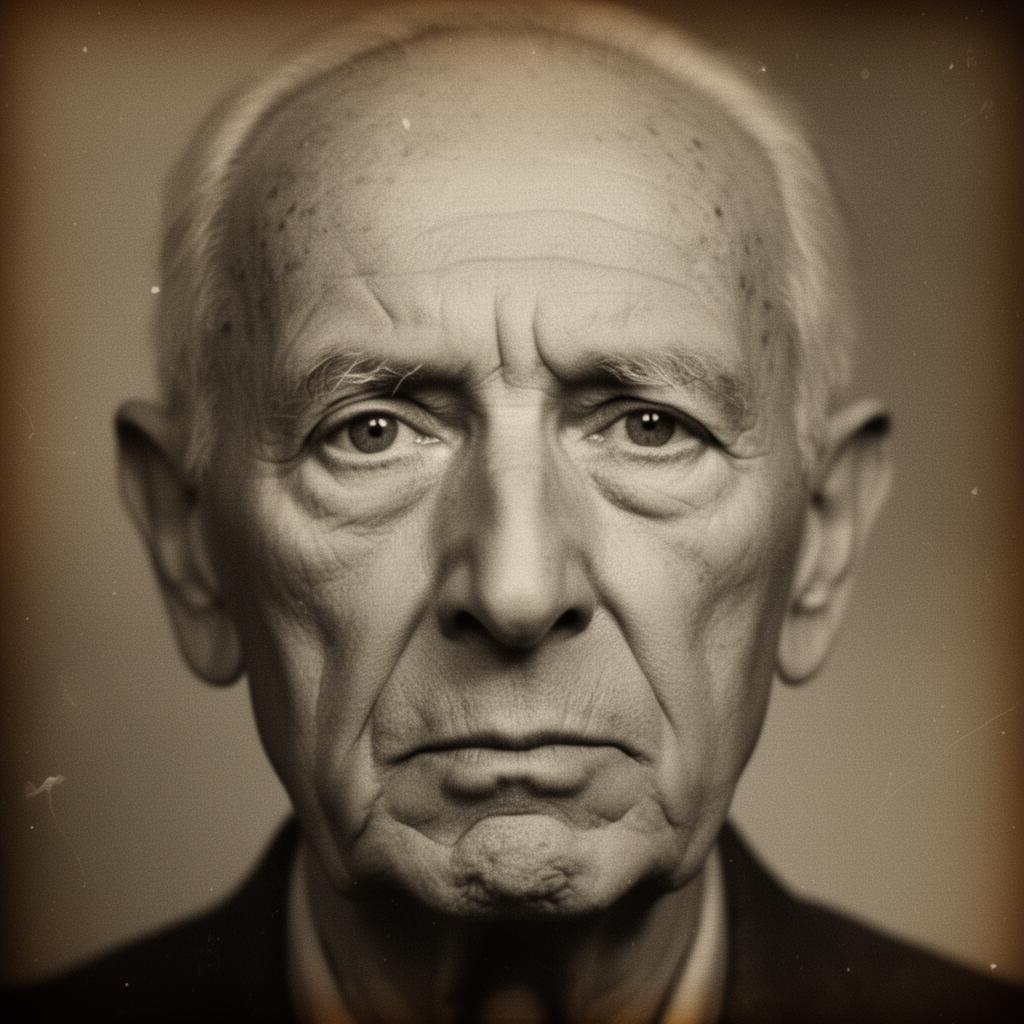
The dead rarely argue with us. The absent rarely correct us. Given enough time, memory quietly rewrites the people we love, transforming them into characters capable of surviving inside our personal narratives.
The People We Remember Incorrectly
There is a photograph of my grandfather that troubles me.
Not because of what it reveals.
Because of what it refuses to confirm.
For years I believed I understood the man. Families construct these certainties gradually. Stories are repeated. Anecdotes become established facts. Personality condenses into a handful of familiar descriptions.
He was strict.
He was kind.
He was difficult.
He was generous.
The words become permanent fixtures within the family landscape.
Eventually they seem indistinguishable from reality itself.
Then one day I found a photograph.
The image did not contradict the stories exactly.
It simply complicated them.
The man staring back at me appeared unfamiliar.
Not physically unfamiliar.
Psychologically unfamiliar.
His expression suggested an interior life that the family narrative had somehow overlooked.
The photograph introduced uncertainty.
And uncertainty, once introduced, rarely leaves quietly.
The longer I looked, the more a troubling question emerged.
What if we remember people incorrectly?
Not deliberately.
Not maliciously.
Inevitably.
Memory is often described as a form of preservation.
Experience suggests otherwise.
Memory behaves more like translation.
Each recollection moves the original experience into a new context. Details shift. Emphasis changes. Meanings evolve.
The remembered person gradually becomes different from the person who once existed.
This process is especially visible within families.
Every family functions as a small storytelling institution. Stories circulate repeatedly until they acquire the authority of fact. The anecdote becomes identity. A single event expands until it represents an entire personality.
The complex human being disappears.
The character remains.
This transformation is understandable.
Human beings are too complicated to remember completely.
We require simplification.
Narratives provide efficiency.
The problem is that efficiency often comes at the expense of accuracy.
The person becomes manageable.
The mystery disappears.
Photography occasionally interrupts this process.
A photograph preserves something that stories cannot fully control.
The image introduces resistance.
The family may insist a relative was always cheerful.
The photograph reveals sadness.
The family may describe someone as distant.
The image reveals tenderness.
The photograph becomes a witness unwilling to cooperate entirely with the official version.
This may explain why old photographs often feel strangely alive.
The image preserves ambiguity.
Narratives seek resolution.
Photographs resist it.
Several years ago, I found myself examining family photographs for an extended period. What initially began as nostalgia gradually transformed into investigation.
The photographs seemed to contain two parallel histories.
The first consisted of the stories I already knew.
The second consisted of visual evidence that complicated those stories.
A smile held slightly too long.
A glance directed elsewhere.
A hand resting unexpectedly on another shoulder.
Tiny details accumulated.
The photographs suggested emotional realities that family narratives had simplified or ignored.
I began noticing how little I actually knew about many people I believed I understood.
The revelation felt unsettling.
And liberating.
The unsettling part was obvious.
Entire personalities appeared less stable than I had imagined.
The liberating part emerged more slowly.
If memory had simplified these people, perhaps it had simplified me as well.
Perhaps identity itself depended upon selective storytelling.
The philosopher Paul Ricoeur suggested that human beings construct identity narratively. We understand ourselves through stories. The self becomes less a fixed entity than an ongoing interpretation.
The idea appears abstract until one begins examining family memory.
Then it becomes unavoidable.
Who was my grandfather?
The answer depends partly upon what happened.
It depends equally upon which stories survived.
History and narrative become inseparable.
The same principle applies to friendships, relationships and even strangers.
Think about someone you loved ten years ago.
The person almost certainly remains alive somewhere within memory.
Yet the remembered version is not identical to the original.
Time has edited them.
Your subsequent experiences have rewritten them.
The relationship continues evolving despite the absence of new information.
Memory does not preserve people.
Memory continues creating them.
This is why absence often intensifies idealisation.
The dead become saints.
Former lovers become symbols.
Parents become myths.
Distance encourages simplification.
Reality encourages complexity.
The two rarely coexist comfortably.
Photography complicates idealisation because photographs preserve fragments of reality that resist myth-making.
A photograph introduces friction.
The image reminds us that every human being contained contradictions.
The stern father laughs.
The cheerful friend appears exhausted.
The beloved grandparent looks lonely.
The image reintroduces uncertainty.
And uncertainty may be one of photography's greatest gifts.
Certainty closes investigation.
Uncertainty begins it.
This became especially clear to me while observing my mother discuss people from her past. Certain stories had been repeated for decades. Their structure felt almost ritualistic.
Then a photograph appeared.
The image disrupted the narrative.
Not dramatically.
Subtly.
Enough to raise questions.
Questions altered everything.
Because once we begin asking who a person truly was, we quickly discover the impossibility of complete answers.
Every life exceeds its documentation.
Every person remains partially unknowable.
The archive is incomplete.
The stories are incomplete.
The photographs are incomplete.
Yet somehow these fragments continue convincing us we understand one another.
Perhaps this is the necessary fiction upon which relationships depend.
No one knows another person completely.
No one knows themselves completely.
We navigate through approximations.
Through stories.
Through impressions.
Through evidence.
The surprising thing is that these approximations often prove sufficient.
Love does not require perfect understanding.
Neither does friendship.
Neither does family.
What matters is not certainty but attention.
The willingness to continue looking.
The willingness to remain curious.
The willingness to allow people to remain larger than the stories we tell about them.
Photography encourages this humility.
The photograph reminds us that every person contains unrecorded dimensions.
Every portrait contains invisible histories.
Every face remains partially unreadable.
Several months after finding the photograph of my grandfather, I realised the image had given me something unexpected.
Not knowledge.
Questions.
And the questions felt more valuable than answers.
The photograph had restored mystery.
The man no longer fit comfortably inside the narrative I had inherited.
He became human again.
Complex.
Contradictory.
Incomplete.
Alive.
Perhaps this is what photographs do at their best.
Not preserve certainty.
Preserve mystery.
The people we remember incorrectly are not victims of memory's failure.
They are evidence of memory's nature.
Human beings cannot be contained by stories.
Not entirely.
The photograph occasionally reminds us of this fact.
A face emerges from the archive.
The narrative hesitates.
The mystery returns.
And for a brief moment we encounter another person not as memory has edited them, but as someone still capable of surprising us.
Filed under
Parallax Letters
Receive new investigations by post.
Related Essays