Writings · Film — 13 min read
The Personal Documentary
Why do filmmakers turn the camera on themselves, their families and their own histories? An exploration of personal documentary as investigation, memory and the search for meaning.
By Kobi Israel · · 13 min
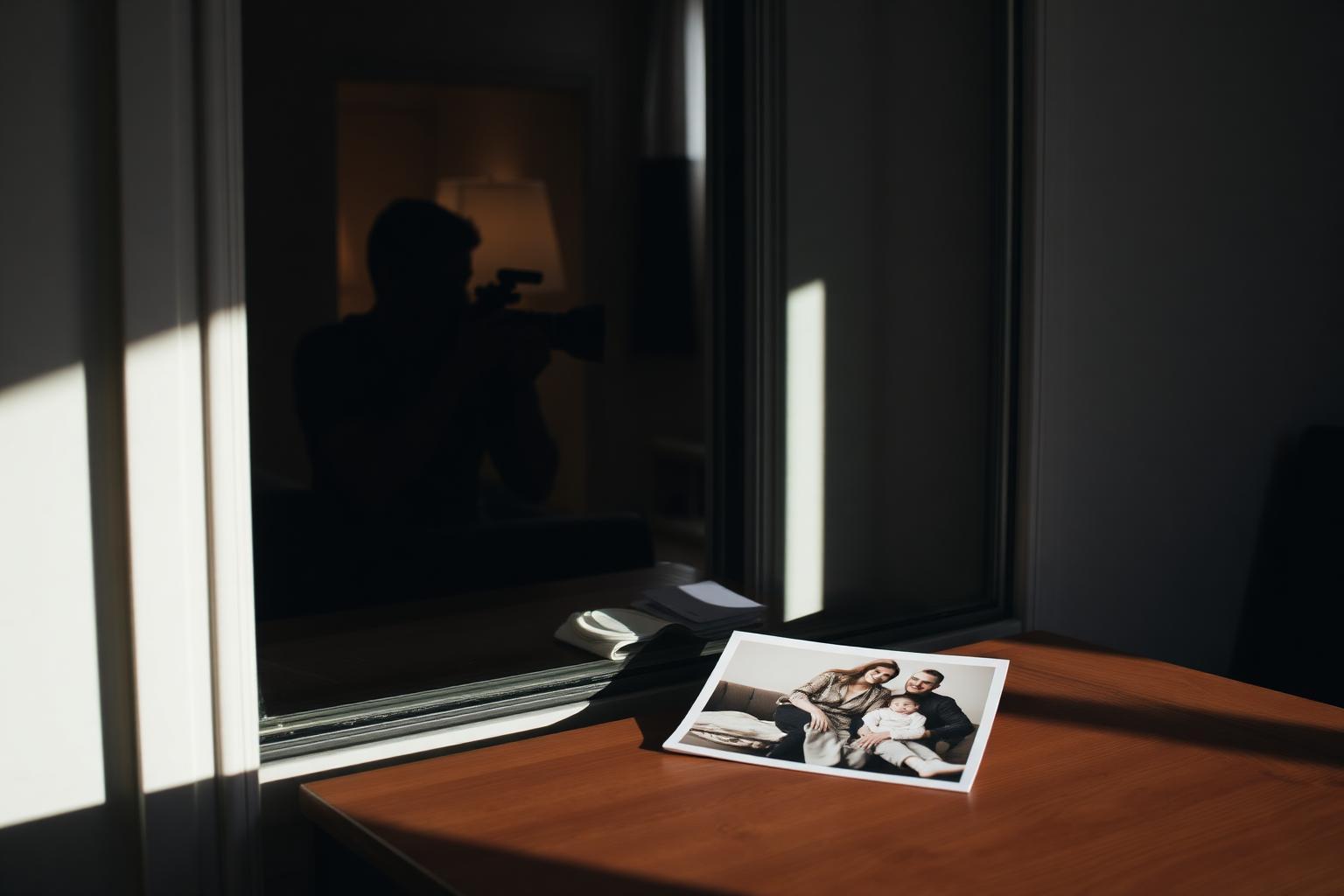
The first time I pointed a camera toward my own life, I felt uncomfortable. Not because the equipment was unfamiliar. I had been photographing for years. Not because the subject was unfamiliar. The subject was myself. That was precisely the problem.
The camera changes when it turns inward. A photograph of a stranger asks one set of questions. A photograph of a parent asks another. A photograph of yourself asks questions that can remain unanswered for decades.
I did not realise this immediately. At first, the process felt straightforward. Document what exists. Record what happens. Preserve what might otherwise disappear. The logic seemed simple. The reality proved more complicated. Because the moment the camera enters your own life, documentation becomes investigation.
Every personal documentary eventually discovers this truth. The film begins with observation. It ends somewhere closer to archaeology. The filmmaker starts digging. The archive opens. Old photographs emerge. Letters appear. Family stories surface. Contradictions multiply. The camera follows. What seemed like a film gradually becomes an inquiry.
This transformation fascinates me because it reveals something essential about personal documentary. The genre is often misunderstood. People assume personal documentaries are about self-expression. Many are. The strongest ones are about self-discovery. The difference matters. Self-expression begins with certainty. Self-discovery begins with uncertainty. The filmmaker does not know. The camera becomes a method of finding out.
This is what connects filmmakers as different as Agnès Varda, Jonas Mekas, Alain Cavalier and Sarah Polley. Their films do not present conclusions. They pursue questions. Who were my parents? What happened here? What remains hidden? Why do I remember this? Why do I keep returning to it? The camera becomes less a recording device than an investigative tool.
Several years ago, I began filming aspects of my own life without a clear objective. Family gatherings. Travels. Conversations. Ordinary afternoons. At the time, the footage felt disconnected. A collection of fragments. Only later did patterns emerge. Certain themes repeated themselves. Memory. Absence. Family. Travel. Loss. Identity. The camera had noticed connections before I did.
This may be one of documentary's most remarkable qualities. The filmmaker chooses where to point the lens. The footage often reveals why. The archive becomes a mirror. Not always a flattering one. Not always a comfortable one. An honest one.
The philosopher Paul Ricoeur argued that human beings understand themselves narratively. We construct identities through stories. The personal documentary complicates this process. The camera introduces evidence. The narrative encounters resistance. A memory says one thing. The footage says another. A family story insists upon certainty. An old photograph introduces doubt. The investigation begins.
This tension appears repeatedly in autobiographical filmmaking. The filmmaker becomes simultaneously narrator and witness. Participant and observer. Subject and investigator. The dual role creates productive instability. The self can no longer remain entirely fictional. Reality intervenes.
Several years ago, while reviewing old footage, I discovered an unexpected sequence. A short clip lasting less than thirty seconds. Nothing dramatic occurred. A conversation. A laugh. A passing gesture. And yet the footage felt extraordinary. Not because of what it showed. Because of what it revealed. A relationship I had misunderstood. An emotion I had overlooked. The camera had preserved evidence beyond my awareness. At the moment of filming, I had seen one thing. Years later, I saw another. The image had remained constant. I had changed.
This may be the hidden power of personal documentary. The film continues evolving after production ends. Each viewing becomes a new investigation. The archive acquires fresh meanings. Time becomes a collaborator.
Chris Marker understood this beautifully. For Marker, the archive was never static. Images entered new relationships. Memories rearranged themselves. The past remained unfinished. The personal documentary inherits this logic. The film becomes a living conversation between different versions of the self. The person filming. The person editing. The person watching years later. Each encounters the material differently. The documentary expands.
This process often leads filmmakers back toward family. Not because family is inherently interesting. Because family contains origins. The search for identity inevitably encounters inheritance. Photographs. Stories. Silences. Conflicts. Patterns. The archive becomes genealogical.
Every family contains mysteries. Every family contains omissions. Every family contains unofficial histories. The personal documentary provides a method for approaching them. Not solving them. Approaching them. The distinction is important. The strongest documentaries rarely deliver certainty. They deepen understanding. Understanding and certainty are not the same thing. Certainty closes questions. Understanding expands them.
Several years ago, I watched a documentary in which the filmmaker spent years investigating a family mystery. By the end, the mystery remained partially unresolved. Yet the film felt complete. Why? Because the filmmaker had changed. The investigation mattered more than the answer. The journey became the story.
This insight altered my own relationship to filmmaking. I stopped expecting resolution. I became interested in process. The camera was no longer a machine for producing conclusions. It became a companion in uncertainty. The lens followed curiosity. The film followed attention. Meaning emerged gradually. Like memory. Like travel. Like life.
This is perhaps why personal documentaries often feel intimate even when they address large subjects. History enters through biography. Politics enters through family. Philosophy enters through daily experience. The abstract becomes tangible. A photograph. A voice message. A train ticket. A conversation. The small object opens onto larger questions. Identity becomes visible through fragments. The filmmaker assembles them. The viewer assembles them again. The documentary becomes collaborative. A shared act of interpretation.
The most moving personal documentaries recognise this incompleteness. They understand that a life cannot be explained fully. The archive remains partial. Memory remains unstable. The self remains unfinished. And yet the attempt continues. The camera keeps rolling. The questions remain alive.
Perhaps this is the deepest reason filmmakers turn cameras toward themselves. Not vanity. Not confession. Curiosity. The desire to understand a life from the inside. The desire to transform experience into inquiry. The desire to look carefully at what would otherwise pass unnoticed.
Every personal documentary begins with a question. The remarkable thing is that the question often changes before the film ends. The filmmaker starts searching for one answer. The camera discovers another. And somewhere between the two, a film appears. Not a conclusion. An investigation.
Parallax Letters
Receive new investigations by post.
Related Essays