Writings · Memory — 15 min read
What Happens When Memory Disagrees With Reality
Can memory be trusted? A meditation on photographs, family history, competing narratives and the uneasy territory where recollection collides with evidence.
By Kobi Israel · · 15 min
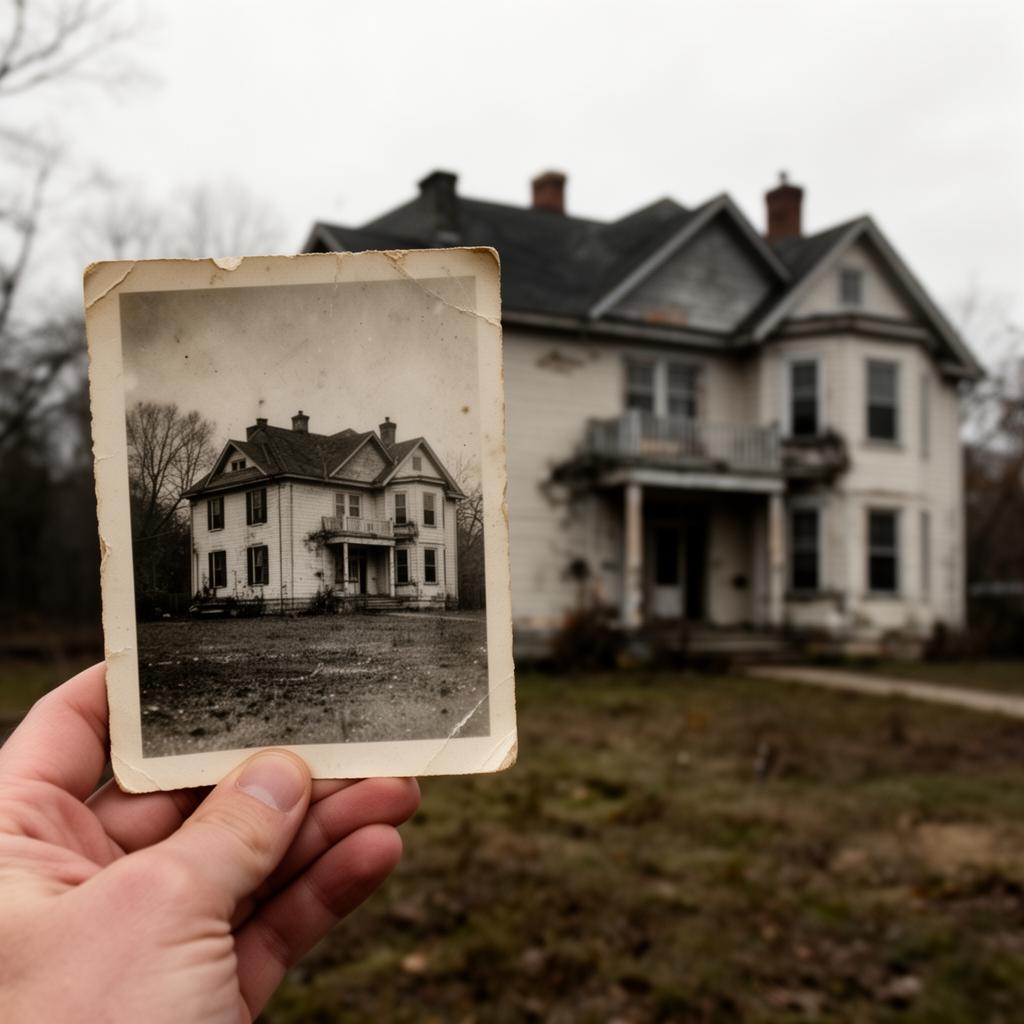
Most people assume memory fails because it forgets. I have come to suspect the opposite. Memory fails because it continues working. It revises, rearranges, protects, edits and invents. The result is not a broken record of reality, but a living relationship with it.
What Happens When Memory Disagrees With Reality
The argument began with a staircase.
Not an important staircase.
Not historically significant.
Not architecturally remarkable.
Just a staircase inside a building where several members of my family had once lived.
One afternoon, a conversation drifted toward childhood memories. Someone mentioned the staircase. Another person disagreed. The disagreement seemed trivial at first.
One remembered the staircase turning left.
Another insisted it turned right.
Both spoke with complete certainty.
Neither doubted themselves.
The confidence interested me more than the staircase.
One of them had to be wrong.
Possibly both.
Yet neither memory felt uncertain.
Each recollection arrived fully formed, carrying the authority of experience.
Eventually a photograph was found.
The staircase turned right.
Reality appeared to have won.
The discussion should have ended.
Instead, something stranger happened.
The person whose memory had been contradicted by the photograph remained unconvinced.
The image provided evidence.
The memory remained intact.
This was the moment I began wondering whether memory and reality operate according to entirely different principles.
We often imagine memory as a storage system.
A mental archive.
A filing cabinet.
A library.
Reality occurs.
Memory records it.
Later we retrieve the information.
The metaphor feels reassuring.
It is also almost certainly wrong.
Memory does not store experiences.
Memory reconstructs them.
Every recollection is less a retrieval than a performance.
The past is rebuilt each time it is remembered.
And like all reconstructions, it contains alterations.
The remarkable thing is not that memory changes.
The remarkable thing is that we rarely notice.
Several years ago, I became fascinated by stories that existed in multiple versions within my family. Certain events generated contradictory accounts. Different witnesses described different outcomes. Details shifted depending on who was speaking.
At first I assumed one version would eventually prove correct.
Then I realised something uncomfortable.
Correctness might not be the most interesting question.
What interested me was why different versions existed at all.
Why had memory produced competing realities?
Why did each person defend their version so passionately?
Why did evidence so rarely resolve the dispute?
Photography provided unexpected clues.
Family photographs often function as referees in these disagreements. Someone retrieves an album. A date is checked. A location is identified. The image appears capable of settling uncertainty.
Yet photographs rarely settle anything completely.
Instead, they generate new questions.
The image proves that a person stood somewhere.
It cannot explain what they felt.
It confirms presence.
It cannot confirm meaning.
Reality survives.
Interpretation remains unstable.
This distinction becomes increasingly important as we grow older.
Most of us assume our memories belong to us.
In truth, memory belongs partly to the present.
Every recollection passes through the person we have become.
Current beliefs influence past events.
Present emotions colour old experiences.
The self continually revises its own history.
The past changes because the narrator changes.
This process is not necessarily dishonest.
It may be essential.
Imagine remembering every event with complete accuracy.
Every embarrassment.
Every argument.
Every disappointment.
Every fear.
Perfect memory would be unbearable.
Forgetting performs an obvious function.
Revision performs a subtler one.
Memory helps construct a version of reality capable of supporting continued existence.
The past becomes emotionally manageable.
Narratively coherent.
Psychologically survivable.
Reality and memory therefore serve different masters.
Reality concerns what happened.
Memory concerns what can be lived with.
The two overlap.
They are not identical.
This may explain why photographs sometimes create discomfort.
A photograph introduces external evidence into an internal narrative.
The image says:
This occurred.
Memory replies:
Perhaps.
Or:
Not exactly.
Or:
Not in the way you think.
Photography often behaves like an unwelcome witness.
The camera records details nobody intended to preserve.
An expression.
A distance between two people.
A gesture.
A mood.
Years later, these details may challenge cherished narratives.
The photograph becomes difficult not because it lies, but because it refuses to cooperate.
The same phenomenon occurs on a larger historical scale.
Entire societies remember themselves selectively.
Nations construct myths.
Families construct myths.
Individuals construct myths.
Reality provides raw material.
Memory provides structure.
The result resembles literature more than documentation.
We become authors of our own past.
This realisation initially disturbed me.
If memory cannot be trusted, what remains?
What foundation supports identity?
The answer arrived unexpectedly while examining old photographs.
A photograph from childhood showed an event I remembered clearly.
The image contradicted several aspects of my recollection.
At first I treated the photograph as correction.
Then something shifted.
I stopped asking which version was true.
I started asking why the differences existed.
The discrepancy itself became meaningful.
Memory had not failed.
Memory had revealed its priorities.
What I remembered was emotionally significant.
What the photograph recorded was visually significant.
The two systems preserved different truths.
Reality had produced one event.
Memory and photography had produced two interpretations.
Neither could replace the other.
Together they formed something larger.
A more complicated understanding.
This may be the deepest lesson photographs offer.
Not certainty.
Complexity.
The image reminds us that every event contains multiple realities.
The reality of experience.
The reality of observation.
The reality of recollection.
The reality of storytelling.
Each remains partially incomplete.
Each depends upon perspective.
Several months ago, I revisited a location from childhood.
The place felt unfamiliar.
Smaller than memory suggested.
Less dramatic.
Less significant.
For a moment I experienced the strange sensation that reality itself had become inaccurate.
Of course reality had not changed.
My relationship to it had.
The landscape remained.
The observer evolved.
Memory and reality briefly collided.
Neither emerged victorious.
Instead, both revealed their limitations.
The place was real.
The memory was real.
The difference between them was real.
Perhaps maturity consists partly of learning to tolerate this ambiguity.
To accept that memory is neither objective nor false.
Neither reliable nor unreliable.
Memory is interpretative.
Photography is interpretative.
Storytelling is interpretative.
Even reality requires interpretation.
Human beings do not inhabit events directly.
We inhabit meanings.
The staircase from the family argument still interests me.
Not because one person was wrong.
Because both believed they were right.
The disagreement revealed something fundamental.
Memory does not preserve reality.
Memory preserves relationships to reality.
The distinction changes everything.
We remember what mattered.
We remember what frightened us.
We remember what confirmed our beliefs.
We remember what helped us survive.
Reality provides the event.
Memory provides the story.
And somewhere between the two, identity quietly emerges.
Perhaps this is why photographs remain so important.
Not because they settle arguments.
Because they keep them alive.
The image continues asking questions long after certainty has disappeared.
The photograph says:
This happened.
Memory replies:
Perhaps.
Then the conversation begins again.
Parallax Letters
Receive new investigations by post.
Related Essays