Writings · Photography — 13 min read
Photography Against Forgetting
Why do we photograph? An exploration of memory, photography, archives and the human struggle against forgetting in an age of infinite images.
By Kobi Israel · · 13 min
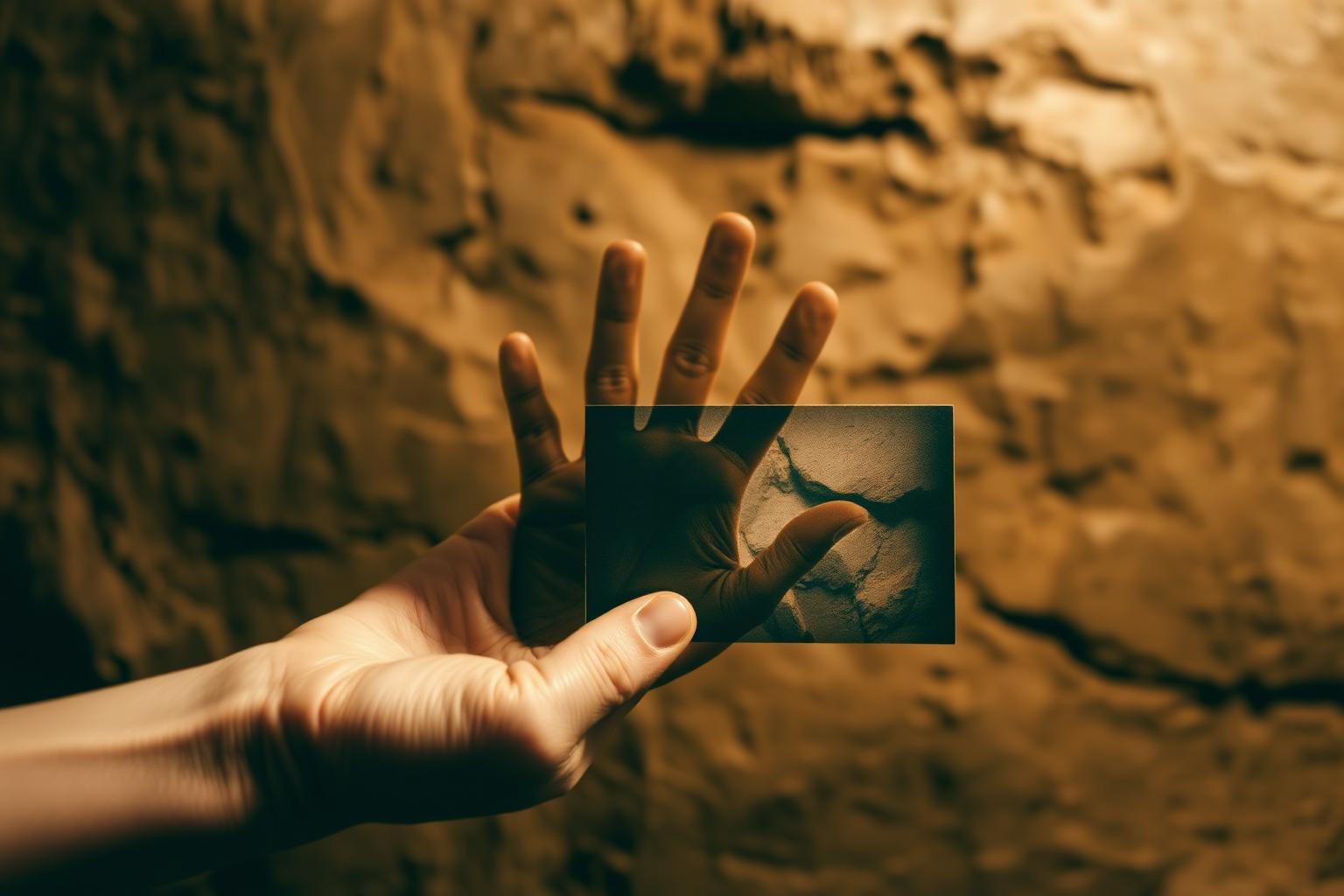
Before photography, there was fire. Before photography, there was charcoal. Before photography, there were hands pressed against cave walls. A silhouette. A trace. Evidence.
Somewhere in prehistory, a human being placed a hand upon stone and left behind a mark. Thousands of years later, another human being encountered that mark and understood something immediately. Someone was here. The distance between those two people may have been measured in millennia. The message remained intact.
Perhaps this is where photography truly begins. Not with cameras. Not with chemistry. Not with technology. With the desire to resist forgetting.
Every culture has invented methods for negotiating disappearance. Stories. Songs. Monuments. Paintings. Graves. Archives. Photographs belong to this ancient family of gestures. The medium changes. The longing remains. We wish to preserve what time insists on carrying away.
The older I become, the more I suspect that photography's popularity has less to do with images than memory. Most people do not photograph because they are artists. They photograph because they are mortal.
A parent photographs a child. A traveller photographs a city. A friend photographs a gathering. The action appears ordinary. Beneath it lies something profound. The photograph says: Stay. The world replies: No. This conversation has been occurring since photography's invention. The remarkable thing is that neither side has ever won.
The photograph never succeeds completely. Time never succeeds completely either. The struggle continues.
Several years ago, I found myself examining old family photographs. The experience felt strangely archaeological. Each image resembled an artefact excavated from another civilisation. A birthday. A holiday. A gathering. A face. Entire worlds survived within rectangles of paper.
Yet the photographs revealed something unexpected. The images preserved far less than I imagined. The voices were missing. The smells were missing. The weather was missing. The conversations were missing. The texture of lived experience had largely vanished.
And yet the photographs remained invaluable. Why? Because forgetting operates incrementally. The photograph cannot save everything. It can save something. Sometimes something is enough.
This may be photography's true achievement. Not preservation. Interruption. The image interrupts forgetting. It slows disappearance. It introduces friction into time. The photograph does not stop the river. It leaves a stone within the current. Years later, memory flows around it. The stone remains.
Roland Barthes understood this tension deeply. For Barthes, photographs contained an unbearable contradiction. They simultaneously confirmed existence and absence. The person was here. The person is gone. The photograph therefore became a witness to both presence and loss. The image preserved evidence. Not permanence. The distinction matters.
We often ask too much of photographs. We expect them to preserve entire lives. They cannot. A photograph remains fragmentary. The image captures an instant. Life continues elsewhere.
And yet fragments possess remarkable power. Human beings rarely remember continuously. Memory itself is fragmentary. A smell. A face. A room. A gesture. A train station. An afternoon. Identity is assembled from fragments. Photography mirrors this process. The camera collects pieces. The mind constructs narratives.
Perhaps this explains why family albums feel simultaneously complete and incomplete. The archive contains enough evidence to suggest a life. Not enough evidence to explain it. The viewer participates. Imagination fills the gaps. Memory performs restoration. The photograph becomes collaborative.
Several years ago, while travelling, I noticed tourists photographing a sunset. Hundreds of phones rose simultaneously. The scene appeared almost absurd. The sunset remained visible. Everyone was already looking at it. Why photograph it? The answer seemed obvious at first. To remember. Then another possibility emerged. Perhaps they were not photographing the sunset. Perhaps they were photographing themselves in relation to it. The image functioned as proof. I stood here. I witnessed this. This moment entered my life.
Photography therefore preserves not only objects. It preserves encounters. Relationships. Meetings between people and places. Meetings between people and people. Meetings between people and time. The photograph becomes evidence that two realities briefly overlapped. The traveller and the city. The parent and the child. The lover and the beloved. The observer and the world. This overlap disappears immediately. The image remains.
The digital age has complicated this relationship. Human beings now produce more photographs in a single day than entire generations once created in decades. The archive has expanded beyond imagination. Billions of images circulate continuously.
Paradoxically, the abundance of photographs appears to have increased anxiety about forgetting rather than reducing it. We photograph more because we fear losing more. The archive grows. So does uncertainty. Will anyone ever look at these images? Will they survive? Will they matter?
The questions reveal something essential. Photography has never been solely about memory. It is also about hope. Hope that the image will travel beyond its moment. Hope that someone will care. Hope that evidence will survive. The photograph functions as a message sent toward an unknown future. A bottle thrown into time.
This becomes particularly visible within family archives. Every photograph represents an act of trust. The photographer assumes someone may one day wish to look. A child. A grandchild. A stranger. The image enters the future carrying possibility.
Several months ago I found myself studying anonymous photographs in a flea market. Boxes filled with unfamiliar faces. Unknown families. Forgotten celebrations. Lives detached from names. And yet the photographs still worked. The images still generated curiosity. The people still felt present. The evidence continued speaking. The photographer had vanished. The message remained.
At that moment I realised something. Photography's greatest achievement is not preventing forgetting. It is preventing total forgetting. The distinction is crucial. Nothing survives completely. Nothing remains intact. Yet traces endure. The photograph preserves enough. Enough to inspire curiosity. Enough to create connection. Enough to interrupt disappearance.
Perhaps every photograph ultimately asks the same question. Will this matter to someone? Not necessarily today. Not necessarily tomorrow. Someday. The question remains suspended within the image. Waiting. A family album. A hard drive. A museum archive. A flea market box. The photograph continues travelling. The future eventually arrives. Someone looks. Someone wonders. Someone remembers. The interruption succeeds. Briefly. Beautifully. Imperfectly.
And perhaps that is all photography was ever meant to do. Not defeat forgetting. Stand against it.
Parallax Letters
Receive new investigations by post.
Related Essays