Writings · Photography — 13 min read
The Photograph as Evidence of Absence
A meditation on photography, memory, loss and time. Why do photographs become more meaningful when the people, places and moments they depict are no longer present?
By Kobi Israel · · 13 min
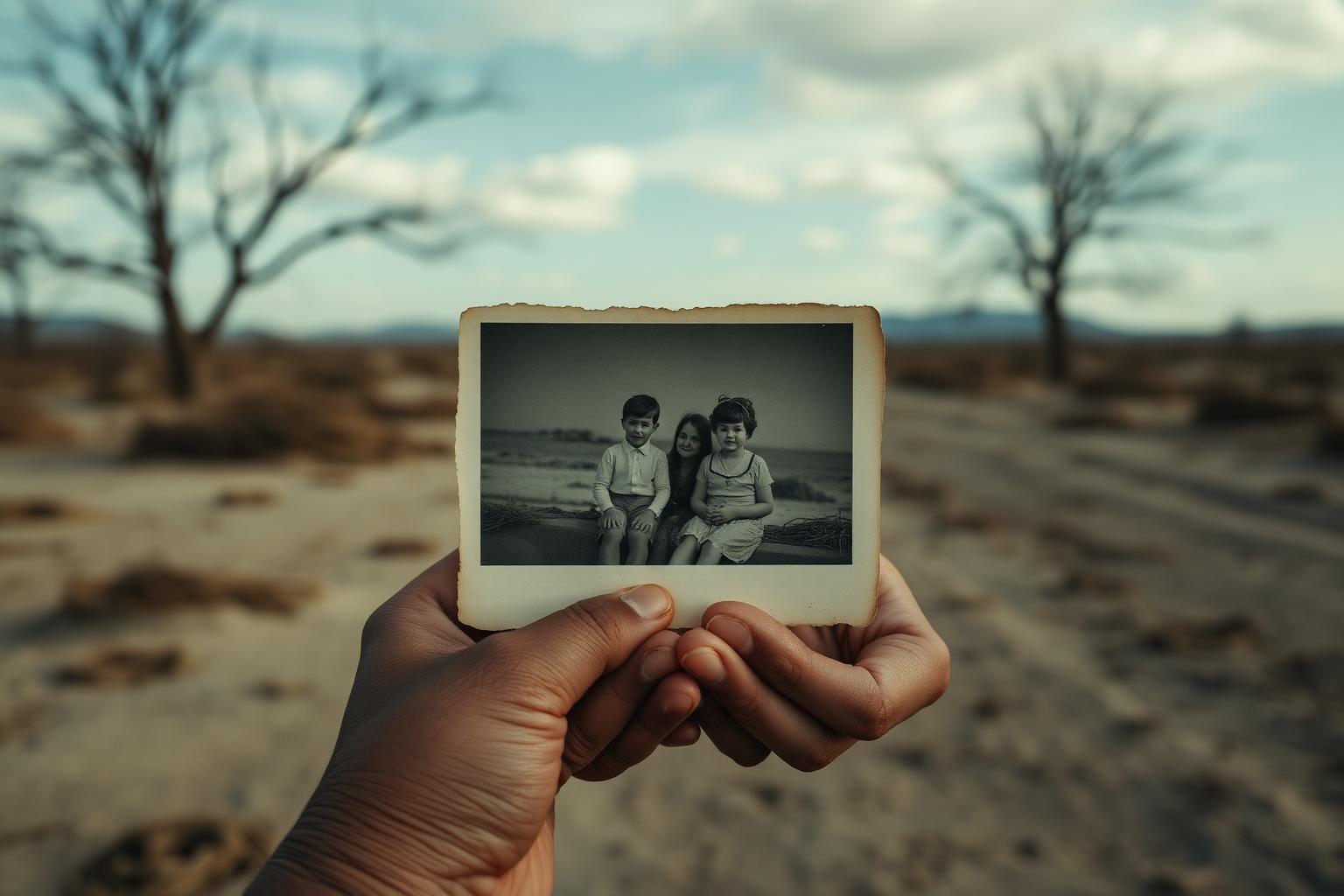
Every photograph begins as evidence of presence. Someone stood there. A face occupied the light. A body interrupted the landscape. The shutter opened. The shutter closed. The moment entered history.
At the instant a photograph is taken, absence is not yet part of the equation. The person exists. The place exists. The relationship exists. The future remains unwritten.
And yet every photograph contains a strange inevitability. Given enough time, presence becomes absence. The photograph waits. The world changes around it.
This transformation may be photography's deepest mystery. Most artistic mediums gain meaning through creation. Photography gains meaning through survival.
A photograph taken yesterday may feel ordinary. The same photograph viewed thirty years later may become devastating. The image itself remains unchanged. The viewer does not. Time enters the photograph long after the shutter closes.
I first understood this while looking through a box of family photographs. The images were familiar. I had seen them countless times. Yet on that particular afternoon something shifted. Many of the people visible in the photographs were no longer alive. The photographs had become different objects. Not physically. Emotionally.
The images now contained an absence that did not exist when they were made. A grandfather smiling beside a car. A relative standing on a balcony. A friend looking directly into the camera. The photographs appeared identical. Reality had altered. The people had vanished. The images remained.
For a moment I realised that photographs operate according to a strange temporal logic. They preserve appearances while accumulating disappearances. The longer a photograph survives, the more absence it contains.
This may explain why photographs often become more powerful over time rather than less. Most objects lose significance through familiarity. Photographs frequently gain significance through loss.
The image begins as documentation. It ends as evidence. Evidence that a particular person once occupied the world. Evidence that a relationship once existed. Evidence that a moment resisted complete disappearance.
Roland Barthes understood this phenomenon with unusual clarity. For Barthes, every photograph carried the same silent message: This has been. The statement appears simple. Its implications are profound. The photograph does not merely show a person. It confirms their existence. The image testifies. The person was here. The light touched their face. The moment occurred. The evidence survives.
What makes this testimony emotionally difficult is that it simultaneously announces another truth. The moment has gone. The person has changed. The world has moved elsewhere. The photograph becomes a witness speaking from a reality that no longer exists.
Photography therefore occupies a peculiar position between memory and archaeology. Memory remains internal. Archaeology remains external. The photograph belongs to both. It is an artefact carrying emotional residue. A fragment of reality preserved beyond its natural lifespan.
This dual nature explains why photographs often provoke emotions disproportionate to their content. A photograph of an empty room can feel heartbreaking. A photograph of an ordinary street can produce longing. A photograph of a stranger can create sadness. The emotional response emerges not from what the image shows. But from what the image implies. Everything visible is already disappearing. The camera records presence. The viewer encounters absence.
Several years ago I photographed a bench in a park. Nothing remarkable was happening. No people. No dramatic weather. No symbolic gesture. The photograph remained uninteresting for years. Then one day I remembered who had been sitting there during a conversation that had changed my life. The image transformed instantly. The bench remained empty. The absence became visible.
This may be one of photography's strangest powers. The camera records objects. The viewer supplies ghosts.
Photography is often described as a medium of memory. I increasingly suspect it is equally a medium of mourning. Not necessarily mourning death. Mourning change. Mourning time. Mourning transformation. The photograph reminds us that every moment becomes inaccessible. Every conversation becomes historical. Every version of ourselves eventually disappears. The image preserves traces of these disappearances.
And yet photography is not pessimistic. At least not entirely. The photograph does not simply document loss. It resists it. The image says: Something vanished. But not completely. A trace remains. The trace may be incomplete. The trace may be fragmentary. The trace may be ambiguous. Yet it survives. This survival matters.
Human beings have always left traces behind. Paintings. Letters. Songs. Buildings. Stories. Photography joined this tradition while introducing a new possibility. For the first time, reality itself could leave a direct imprint. The world inscribed itself upon a surface. The photograph became a physical encounter between light and time.
Perhaps this explains why photographs often feel different from other forms of representation. The image appears less created than discovered. The photograph resembles evidence collected from reality. And evidence carries responsibility. It asks to be interpreted. It asks to be revisited. It asks questions. Who was this person? What happened here? What remains unseen? The photograph rarely provides answers. Its power lies in uncertainty. The image survives because it remains unfinished. Every generation encounters it differently. Every viewer contributes new meanings. Every absence alters interpretation. The photograph continues evolving long after its creation.
This became particularly clear to me while looking at anonymous photographs in flea markets. Boxes filled with faces. Lives detached from names. Histories separated from context. The photographs appeared orphaned. Yet they continued functioning. The image still invited attention. Still generated curiosity. Still resisted disappearance. A stranger's photograph can survive longer than their biography. The trace outlives explanation. The image continues travelling.
Perhaps this is the true subject of photography. Not presence. Not memory. Not even time. Continuity. The photograph allows fragments of reality to continue moving beyond their original moment. Across decades. Across countries. Across generations. The image becomes a traveller.
The remarkable thing is that it does not travel alone. It carries absence with it. The absence becomes part of the photograph. Part of its meaning. Part of its emotional weight. The longer the journey, the heavier the image becomes.
And yet the photograph never collapses beneath this burden. It continues. A small rectangle of paper. A digital file. A fragment of light. A witness. Proof that something existed. Proof that something changed. Proof that something remains.
Perhaps every photograph eventually becomes evidence of absence. Not because absence defeats presence. Because presence leaves traces. And traces, however fragile, continue speaking long after the voices themselves have fallen silent.
Parallax Letters
Receive new investigations by post.
Related Essays