Writings · Photography — 12 min read
Why We Keep Taking the Same Picture
Why do we continue photographing sunsets, lovers, children, trains and empty streets when billions of similar images already exist? A meditation on repetition, memory and photography.
By Kobi Israel · · 12 min
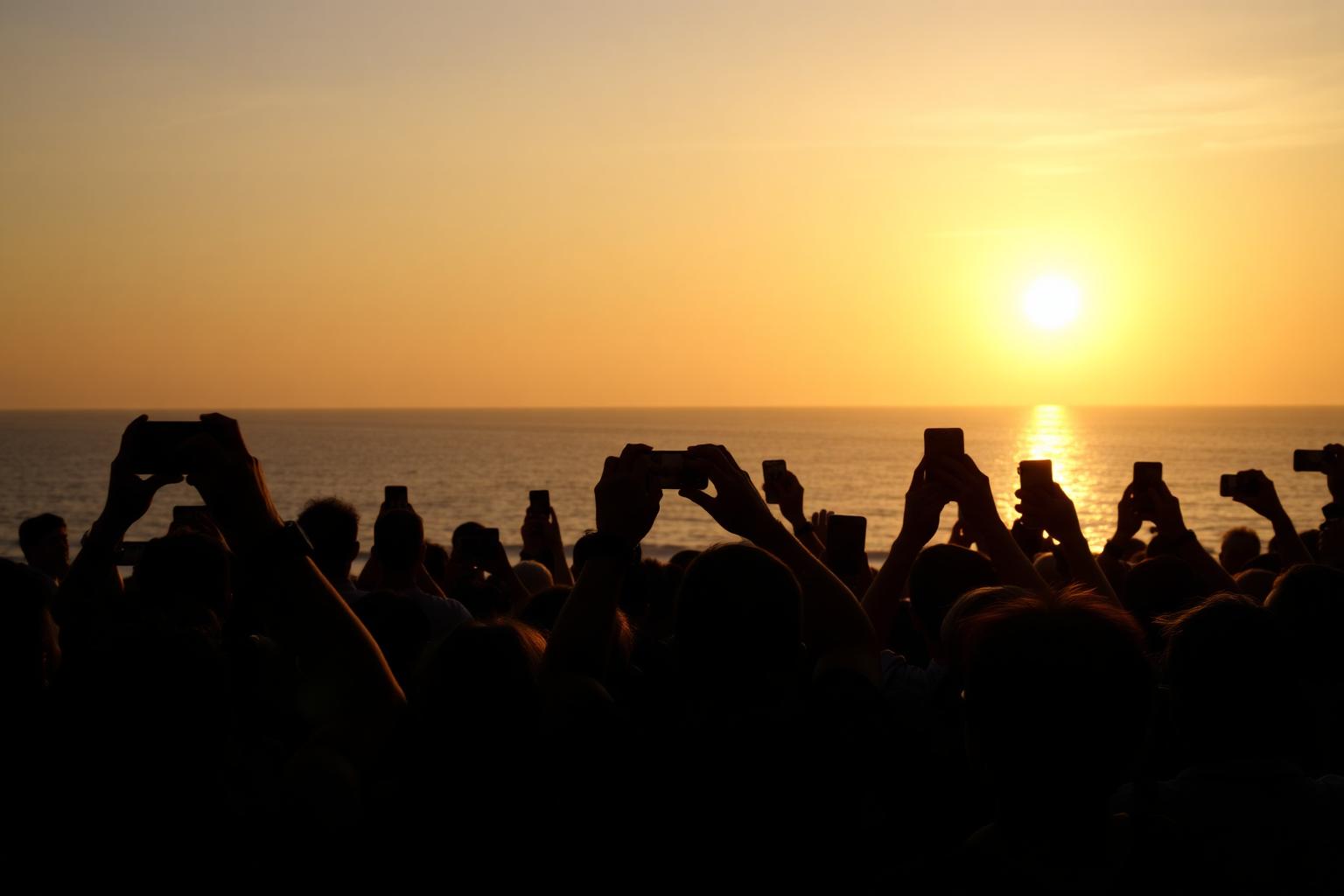
A few years ago, standing on a beach at sunset, I watched something familiar unfold. The sun approached the horizon. The sky shifted colour. People reached for their phones. Within seconds, dozens of cameras were pointed toward the same spectacle.
The scene felt almost absurd. Millions of people had photographed sunsets before. Billions, perhaps. The image already existed. In fact, every possible version of the image probably existed.
And yet nobody seemed discouraged by this fact. No one lowered their camera and said: This has already been done. Instead, they photographed. Again. The question stayed with me long after the light disappeared. Why do we keep taking the same picture?
The answer seems obvious at first. Because we enjoy beauty. Because we want memories. Because photography has become habitual. These explanations contain some truth. None feel complete. The deeper answer, I suspect, lies elsewhere.
Human beings do not photograph subjects. They photograph relationships. The sunset itself is not the photograph. The relationship between the observer and the sunset is. The distinction changes everything.
There may be ten million photographs of the Eiffel Tower. Yet no one has photographed my encounter with it. There may be billions of photographs of children. Yet no one has photographed my child at this precise age, beneath this precise light, looking in this precise direction. Photography appears repetitive only when viewed externally. Internally, every photograph feels unique. Not because the subject changes. Because the observer does.
This may explain why certain motifs recur endlessly throughout photographic history. Children. Doorways. Windows. Railway stations. Roads. Lovers. Meals. Sunsets. Empty rooms. These subjects are not merely visual. They are symbolic. Each functions as a container for human experience. The photograph becomes a vessel. Meaning is poured into it repeatedly. The vessel remains. The contents change.
Several years ago, I noticed that I had photographed trains throughout much of my life. Not consciously. Instinctively. Cities changed. Countries changed. Cameras changed. The trains remained. At first this seemed unimaginative. Then I began examining the images more carefully. The photographs were not really about trains. They were about departure. Possibility. Movement. Distance. The train had become a recurring metaphor through which I understood the world. The repetition was not visual. It was psychological.
This may be true of many photographers. We imagine we are photographing reality. Often we are photographing ourselves. Again and again. Through different disguises. The same question returns wearing different clothes. The same longing appears in different landscapes. The same fear hides inside different portraits. The camera becomes a tool for investigating recurring obsessions.
Photography therefore resembles dreaming more than documentation. Dreams repeat symbols. Photography repeats symbols. Neither repetition is accidental. Both reveal preoccupations.
The philosopher Søren Kierkegaard described repetition as a fundamental human condition. We often imagine life moving forward in a straight line, yet experience repeatedly circles familiar themes. Love. Loss. Belonging. Identity. Desire. Mortality. The details change. The questions remain.
Photography mirrors this structure. Every generation photographs the same subjects because every generation encounters the same existential questions. The child. The parent. The journey. The home. The departure. The return. Technology evolves. Human concerns remain surprisingly stable.
This became particularly apparent while examining family archives. Photographs separated by seventy years displayed remarkable similarities. A grandfather photographed his child beside a window. Decades later, his child photographed another child beside another window. The compositions differed. The impulse remained identical. The photographs appeared to be speaking to one another across time. A visual conversation between generations. The same gesture repeated. Not because imagination had failed. Because affection had survived.
Photography often inherits its subjects. Families pass down visual habits in the same way they pass down stories. We photograph what was photographed for us. A birthday. A holiday. A gathering. A farewell. The repetition becomes cultural. A ritual of remembrance. And like all rituals, its value derives not from originality but continuity. A wedding ceremony is repeated. A prayer is repeated. A photograph is repeated. Meaning emerges through recurrence.
The modern obsession with originality sometimes obscures this truth. We celebrate novelty. We distrust repetition. Photography quietly challenges this assumption. Some of the most important photographs in a person's life are deeply unoriginal. A family portrait. A child at the beach. A parent beside a birthday cake. The image contributes nothing new to photographic history. It contributes everything to personal history. The distinction matters.
Art history asks whether an image has been seen before. Memory asks whether this moment has been lived before. The answers differ. The sunset has been photographed countless times. This sunset has not. The difference appears small. Emotionally, it is enormous.
Several years ago, while reviewing thousands of photographs from my archive, I discovered something unexpected. My favourite images often resembled one another. The same kinds of streets. The same kinds of shadows. The same kinds of absences. The repetition embarrassed me initially. Then it fascinated me. The photographs revealed patterns invisible while I was making them. The archive functioned like a psychological map. Certain questions kept returning. The camera followed them.
Photography, I realised, may be less about seeing the world than recognising what continues drawing our attention within it. The photograph becomes evidence of attraction. Not only visual attraction. Philosophical attraction. Emotional attraction. Existential attraction. The image records what repeatedly calls us back.
Perhaps this is why we keep taking the same picture. Not because the world lacks variety. Because certain experiences remain inexhaustible. A face. A journey. A window. A road. A child. A sunset. The image never feels finished. The question never feels answered. So we photograph again. And again. And again. Not in pursuit of novelty. In pursuit of understanding. The repetition becomes investigation. The camera returns to familiar territory because meaning continues hiding there. The sunset remains unresolved. The face remains mysterious. The journey remains unfinished.
Photography therefore teaches a lesson that extends beyond images. Human life itself is repetitive. We revisit the same places emotionally. We ask the same questions repeatedly. We seek meaning through recurrence. The photograph simply makes this process visible. Every image appears unique. Every image belongs to a larger conversation. The sunset joins other sunsets. The portrait joins other portraits. The farewell joins other farewells. The archive grows. The themes remain.
And somewhere inside that repetition, something remarkable occurs. The familiar becomes new again. Not because the subject changes. Because we do.
Parallax Letters
Receive new investigations by post.
Related Essays